Eating in Osaka: just join the queue where the locals are waiting
Eating in Osaka: our simple trick for finding great food, plus takoyaki, okonomiyaki, kushikatsu, Dotonbori, Kuromon Market and tips on queues and paying.

Disclosure: this article contains referral/partner links marked with *. If you sign up through them, we may receive a commission or bonus at no extra cost to you. Learn more
Key takeaways
- Our trick in Osaka: we simply joined queues where locals were waiting, without knowing what was being sold at the front.
- Osaka is known as Japan's street food capital; its signature dishes are takoyaki, okonomiyaki and kushikatsu.
- The golden kushikatsu rule: dip your skewer in the shared sauce only once, never after taking a bite.
- In Japan you queue in an orderly way, never cut in and wait to be seated; tipping is not customary.
- Carry cash: many small eateries and ticket machines only take yen in notes and coins, while an ICOCA card covers trains, convenience stores and many shops.
Eating in Osaka can feel overwhelming, so we kept our strategy simple: wherever locals were queuing, we joined the line, without knowing what was being sold at the end of it. In this guide we explain why that works so well in Osaka, which dishes you should try, where to find them, and what to know about queues, ticket machines and paying in Japan.
Why did we just join queues in Osaka?
Finding good food in an unfamiliar city is harder than it sounds. Menus are often only in Japanese, many small places barely have a sign, and the choice is endless. At some point in Osaka we stopped searching. Our approach became very simple: if there was a line of locals somewhere, we got in at the back. Quite often we only found out what we were queuing for when we reached the front.
That sounds like a gamble, but there is logic to it. Queuing is a completely normal part of eating out in Japan, and waits of thirty minutes to an hour are not unusual at popular spots. People who wait that long usually know why. And when the line is full of people from the neighbourhood rather than tourists, that is a pretty reliable signal.
For more on the city and our videos, visit our Osaka page.
What does “kuidaore” mean?
Osaka has a famous nickname: the city of “kuidaore”. The word roughly means “eat until you drop”, or even to ruin yourself by spending on food. It fits. Few cities in Japan are as closely tied to street food. The Japan National Tourism Organization singles out Osaka as an exception because its street stalls are far livelier than in most other Japanese cities.
Which dishes should you try in Osaka?
Three dishes are considered the city’s great classics, plus fresh seafood and snacks at the markets.
| Dish | What it is | Where to find it |
|---|---|---|
| Takoyaki | Round batter balls filled with octopus, usually topped with sauce, mayonnaise and bonito flakes | Street stalls, especially around Dotonbori |
| Okonomiyaki | Savoury pancake with cabbage and toppings of your choice, cooked on a hot plate | Restaurants with table griddles or counters |
| Kushikatsu | Breaded, deep-fried skewers of meat, vegetables or seafood | Shinsekai and many places around town |
| Seafood and snacks | Grilled shellfish, sashimi, fruit, small bites | Kuromon Market |
Takoyaki: small balls with a story
Takoyaki are probably Osaka’s best-known street food. They are credited to street vendor Tomekichi Endo, who sold them in Osaka in 1935. His shop Aizuya still exists and serves the original version without sauce or mayonnaise. Today you will find takoyaki on almost every corner. Careful with the first bite: the inside is often still extremely hot.
Okonomiyaki: the pancake your way
“Okonomi” means something like “whatever you like”, and that is the whole idea. Batter, lots of cabbage and your favourite ingredients are fried on a hot plate, then finished with sauce and mayonnaise. In some restaurants you cook it yourself at the table; in others the staff do it for you.
Kushikatsu: the city’s most important rule
Kushikatsu are deep-fried skewers with one rule everybody in Osaka knows: no double dipping. The sauce often sits in a shared container on the counter, so you dip your skewer once, before your first bite. Need more sauce? Use a piece of the free cabbage to scoop it up. Some places have now switched to individual sauce dishes or bottles.
The Shinsekai district is especially famous for kushikatsu. Nippon.com describes it as an area of cheap eateries with plenty of retro atmosphere. Kushikatsu Daruma, in business since 1929, is one of the best-known names and is credited with the sauce rule.
If you would like a guide to show you Shinsekai and Dotonbori and handle the ordering, a food tour is an easy option.
Where are the best places to eat in Osaka?
Dotonbori: neon lights and street food
Dotonbori is the city’s most famous nightlife strip. Restaurants and stalls with giant illuminated signs line the canal, and takoyaki, okonomiyaki and kushikatsu are all within a few steps of each other. It is loud, crowded and touristy, which is exactly what makes it fun. This is also where watching the queues pays off most: where the line is mostly Japanese, the food is usually worth it.
Kuromon Market: Osaka’s kitchen
Kuromon Ichiba is often called “Osaka’s kitchen”. The covered market is a short walk from Namba and has a long history; it was officially recognised as a market in 1902. Chefs and locals shop here, and visitors can try fresh seafood, grilled skewers, fruit and small snacks on the spot.
Go in the morning or around lunchtime. Opening hours vary from stall to stall, and many fish stalls close in the afternoon.
How do you queue properly in Japan?
Queuing in Japan follows clear, unspoken rules. Knowing them makes a good impression:
- Never cut in: The order is sacred. Join at the back, however long the line.
- Wait to be seated: In most restaurants you do not pick your own table. Staff will show you where to sit.
- Eat at the stall: According to the Japan National Tourism Organization, eating while walking is considered impolite in most public places. Stay by the stall after buying or find a quiet corner.
- No tipping: Tipping is not customary in Japan.
Tip: While you wait, watch how the people ahead of you order and pay. Is there a ticket machine, a list to sign, a picture menu? That way you know exactly what to do when it is your turn, and you will not hold up the line behind you.
How do restaurant ticket machines work?
At many ramen shops, noodle bars and simple eateries you do not order from staff but from a ticket machine. It is straightforward:
- Insert money.
- Press the button for your dish (often with a photo, sometimes only in Japanese).
- Take the ticket and hand it to the staff.
- Sit down when you are asked to.
The most common beginner mistake is sitting down at a free seat before buying a ticket. The machine is often right by the entrance, with the queue forming in front of it. Decide what you want while you are still in line so you are not stuck searching at the machine.
Cash or card: how do you pay for food in Osaka?
Cards are accepted in more and more places in Japan, but you should still carry cash when eating out. Many small restaurants, stalls and ticket machines only take yen in cash.
An IC card is also very handy. In Osaka that means ICOCA from JR West. According to JR West, it works not only on trains and buses but also at station kiosks, drink vending machines, convenience stores, restaurants and many other shops. You can get one at JR West stations, including Kansai Airport, and top it up with cash.
Which cards we use when travelling and how to avoid fees at ATMs is covered in our guide to paying abroad.
What else should you know?
- Allow time: If you queue the way we did, some waits will be long. Do not pack too much into a food day.
- Small portions: Street stall portions are small. Share dishes and you can try more.
- Translation app: A camera translation app helps with menus and machines labelled only in Japanese.
- Combine trips: Kyoto and Nara are close to Osaka. We visited both too; see our Kyoto and Nara pages.
Is the queue strategy worth it?
For us it was one of the best ways to get to know Osaka. Instead of comparing ratings, we trusted the people who live there, and most of the time we were rewarded. Of course not every queue is a winner, but the surprise is half the fun. Give it a go: join the line, see what everyone else orders and let the city surprise you.
You can find our videos from Japan on the Osaka page and under Videos.
More tours & tickets
AdPopular experiences on GetYourGuide that we picked for you. These are partner links (*): if you book through them, we earn a small commission at no extra cost to you. Learn more
More videos from our trips
 360°15:40Den Den Town – Osaka, Japan 🇯🇵 | 360° Walking Tour | Original Sound
 – opens YouTube in a new tab
 360°13:47Umeda Sky Building – Osaka, Japan 🇯🇵 | 360° Glass Staircase Tour | Original Sound – opens YouTube in a new tab
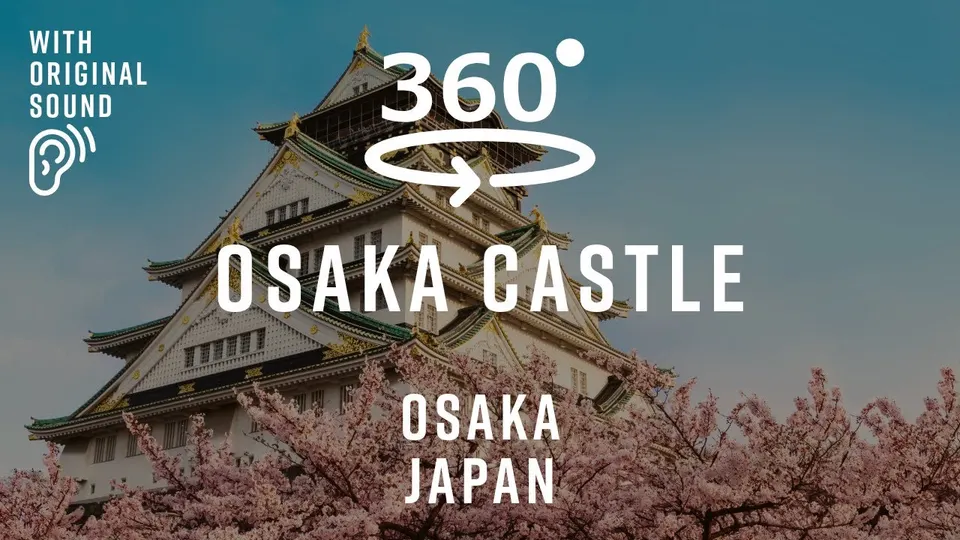 360°29:43Osaka Castle, Japan 🇯🇵 | 360° Walking Tour | Original Sound – opens YouTube in a new tab
 360°15:41Osaka, Japan 🇯🇵 | Night Street Walk 360° | Original Sound – opens YouTube in a new tab
 7:01One Day in Osaka – Castle, Den Den Town & Sunset Views | VLOG 054 – opens YouTube in a new tab
 15:49Universal Studios Japan 🇯🇵 - Super Nintendo, Donkey Kong & Harry Potter! | VLOG 053 – opens YouTube in a new tab
FAQ
What should you eat in Osaka?
The classics are takoyaki (batter balls with octopus), okonomiyaki (a savoury cabbage pancake) and kushikatsu (deep-fried skewers). Add fresh seafood and snacks at Kuromon Market.
Is a long queue in Japan a good sign?
Often, yes. Queuing is a normal part of eating out in Japan, and waits of half an hour to an hour are common at popular places. If the line is mostly locals, that is the best sign of all for us.
How do restaurant ticket machines work in Japan?
Insert money, press the button for your dish and hand the ticket to the staff. Buy the ticket before you sit down; the machine is often right by the entrance.
Do you tip in Osaka?
No, tipping is not customary in Japan. Good service is considered standard, and leaving a tip can cause confusion.
Can you eat while walking in Osaka?
According to the Japan National Tourism Organization, eating while walking is considered impolite in most public places. Stay by the stall or find a spot to finish your snack.
Sources
No guarantee – rules and prices may change. As of: 24 October 2026
- Japanese Etiquette (Japan National Tourism Organization)
- ICOCA – Tickets and IC cards (JR West)
- Osaka Shinsekai: Cheap Dining and Plenty of Atmosphere (nippon.com)
- Osaka Food: Top 14 Food & Restaurants in 4 Popular Areas (Kansai Airport)
- Takoyaki and Osaka (Japan Experience)
- Kuromon Market (Japan Travel)
- Things you need to know about restaurants in Tokyo (Time Out Tokyo)
- 10 Mistakes To Avoid When Ordering Food In Japan (Tasting Table)